What does Inclusive Excellence really look like?
9th Sep 2026
Article
Rob Lane, Head of Clayesmore, on why excellence must mean every child, not a select few
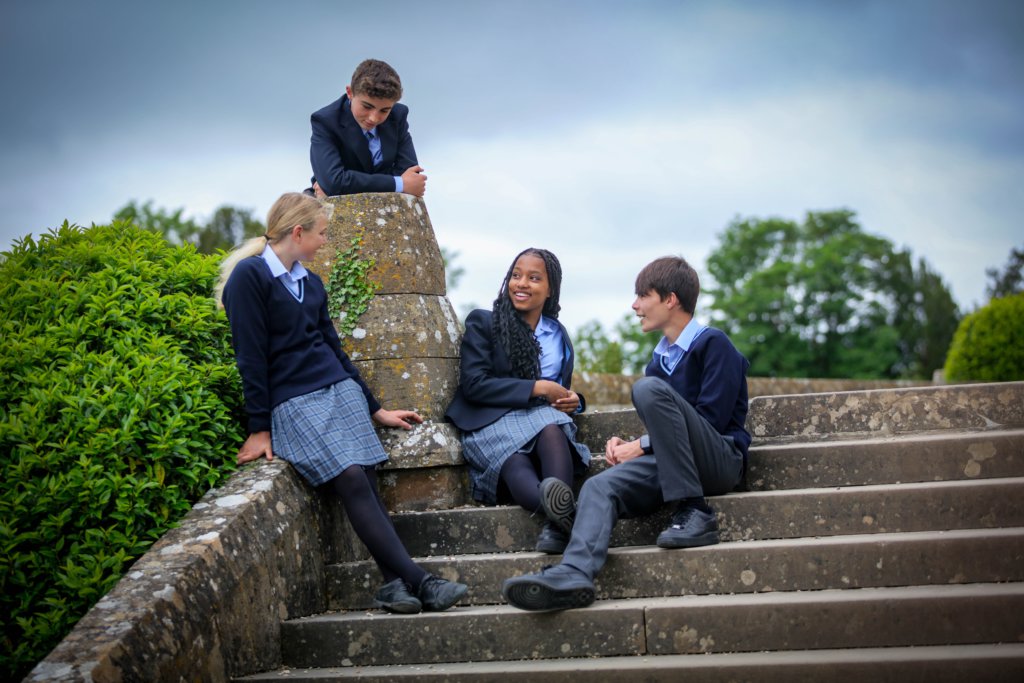
For 130 years, Clayesmore has believed that our school should create an environment where every child can find their place, discover what they are good at and develop the confidence to see what they might become.
That sounds straightforward, but in practice, it is rather more nuanced than it might seem.
We live in a world in which education is often judged through relatively narrow measures of success. Examination results matter, of course. Academic ambition matters enormously. Young people deserve to be taught well, challenged intellectually and given every opportunity to achieve highly.
But is that enough?
For me, excellence in education cannot mean creating a school that works brilliantly for a small number of children. It should mean creating the conditions in which every child can discover their strengths, challenge themselves and achieve more than they thought possible.
That is what we mean by Inclusive Excellence at Clayesmore.
It is an idea that feels particularly important as I begin my time here. Clayesmore has a lovely sense of itself: ambitious without being overbearing, personal without being complacent and, importantly, a place where children are known. There is a warmth to the school that is difficult to manufacture but easy to recognise, and easy to feel.
But warmth alone is not enough. Nor is academic ambition on its own. The purpose of a modern independent school should be to bring the two together.
Academic excellence remains fundamental. We want pupils to think hard, to ask difficult questions, to be curious and to achieve the very best results of which they are capable. Excellent teaching, strong scholarship and intellectual ambition are central to that.
But excellence looks different for different children and outcomes at the end of the Upper Sixth will look different for different children.
Each pupil should be stretched, nurtured and supported to achieve the qualifications they need for their next step. For some that’s a place at Oxbridge, on a medical degree course or at college in America. For others, it’s landing a place on the perfect apprenticeship scheme, at a dance school in London or having the skills, characteristics and confidence to inherit the family business or take over the family farm. All are valid. Our objective as educators should be to help them find their path and start their journey into adulthood as well prepared as possible.
To get there, we have to be comfortable that for one pupil, Inclusive Excellence might mean a set of outstanding examination results. For another, it might mean finding the confidence to perform on stage. It might be discovering a talent in the music school, leading a team on the sports field, designing something, solving a practical problem, developing a passion they didn’t know they had or simply finding the thing that makes them want to get up in the morning.
The point is not that academic achievement doesn't matter. It is that it cannot be the only measure of what a young person is capable of becoming, not in today's world.
Our children are entering a period of rapid global change. Artificial intelligence will transform the way we work and learn. Employers will increasingly value communication, creativity, adaptability and judgement alongside technological fluency and traditional knowledge. Young people will need to navigate complexity and uncertainty in ways that are difficult to predict.
Schools therefore have a responsibility to do more than prepare pupils for the next examination. We need to prepare them for the next chapter of their lives. That means giving them knowledge, but also teaching them how to use it. It means developing character: confidence without entitlement, resilience without glorifying failure and ambition alongside empathy.
In short, I think every child deserves the chance to answer a deceptively simple question: “What am I capable of?”
Our job as educators is to create the environment in which they can find out. That requires high expectations, excellent teaching and genuine academic ambition. It also requires opportunity, encouragement, relationships, creativity, character and the confidence to try things that might not come naturally.
It means knowing a child well enough to see potential they may not yet see in themselves, and then giving them the support and the challenge to pursue it. That is Inclusive Excellence.
Not lowering the bar so that everyone can reach it. Quite the opposite. It is about making sure that every child has the opportunity, support and belief to reach their bar, and perhaps to discover that it was higher than they had imagined.
At Clayesmore, that is the ambition: not excellence for a select few, but excellence in all its different forms, for every child, in an environment where no one gets lost.
Rob Lane, Head, Clayesmore School